

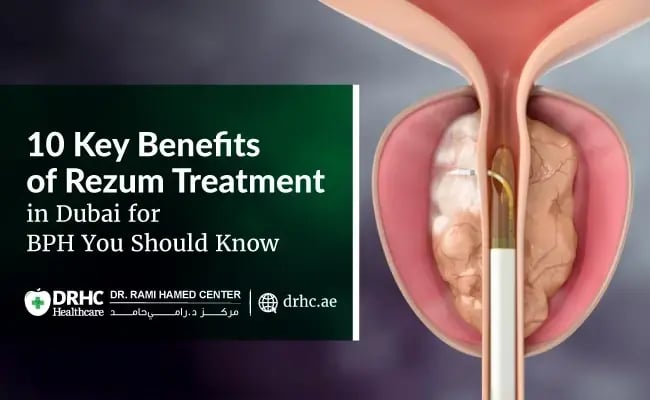
Rezum is a minimally invasive treatment for benign prostatic hyperplasia (BPH), a common condition in aging men where the prostate enlarges and affects urinary function. It uses water vapor (steam) to reduce prostate tissue. Here are the advantages of the Rezum procedure:
- Minimally Invasive:
- Performed as an outpatient procedure, often without the need for general anesthesia.
- Short recovery time compared to traditional surgical options like TURP (Transurethral Resection of the Prostate).
- Preserves Sexual Function:
- Lower risk of side effects such as erectile dysfunction or retrograde ejaculation compared to other BPH treatments.
- Quick Procedure:
- The treatment takes only 10–15 minutes, making it convenient for both patients and providers.
- No Need for Long-Term Medication:
- Reduces reliance on daily medications for BPH, which can have side effects like dizziness or decreased libido.
- Effective Symptom Relief:
- Patients experience significant improvement in urinary symptoms, including reduced frequency, urgency, and nighttime urination (nocturia).
- Durable Results:
- Studies show that the benefits of Rezum can last for several years.
- Lower Risk of Complications:
- Fewer risks of severe bleeding or infections compared to traditional surgeries.
- Versatility:
- Suitable for a wide range of prostate sizes and configurations.
- Minimal Downtime:
- Most patients can resume normal activities within a few days, with some temporary restrictions on heavy lifting and vigorous activities.
- Covered by Insurance:
- Many health insurance plans, including Medicare, cover the Rezum procedure.
Despite these advantages, it’s essential to consult with a healthcare provider to determine if Rezum is the right option, as it may not be suitable for everyone, particularly those with severe symptoms or very large prostates.

Learn more about our Editorial Process.
Topic: Urology Blogs





Leave a comment