

Blood in the urine can appear as a pink tinge, a red colour, or occasional small clots. Sometimes it is found only on a urine test. There are several possible explanations, including infection and stones, but bladder cancer is one reason doctors take this symptom seriously. A single episode deserves assessment even if it stops and you feel otherwise well.
Why a painless symptom still matters
Bladder cancer may cause bleeding without burning or discomfort. The bleeding can come and go, which makes it tempting to assume the problem has resolved. The absence of pain does not identify the cause. Equally, seeing blood does not mean that you have cancer. The purpose of investigation is to establish what is happening rather than guess from appearance alone.
When monitoring is an active choice
Some men with selected localised cancers are offered active surveillance. This means scheduled checks rather than ignoring the diagnosis. These can include PSA testing, MRI and repeat tissue sampling when appropriate. Treatment can be reconsidered if findings change. Watchful waiting is a different approach, usually focused on managing symptoms when they arise rather than pursuing intensive monitoring for curative treatment.
What information helps your doctor?
Describe when the blood appeared, whether you had pain, and whether it was mixed throughout the urine. Mention smoking, previous bladder problems, occupational exposures, and all medicines, including blood thinners. In women, the doctor may clarify whether the blood could be vaginal. A presumed infection that keeps returning or bleeding that persists after treatment also needs review.
The first checks
A consultation commonly includes a urine sample and an assessment of your medical history. Depending on the findings, blood tests and imaging may be arranged. Urine can be checked for infection and, in selected circumstances, abnormal cells. The tests are chosen to answer different questions; a urine result or scan alone does not always provide a complete view of the bladder lining.
Looking inside the bladder
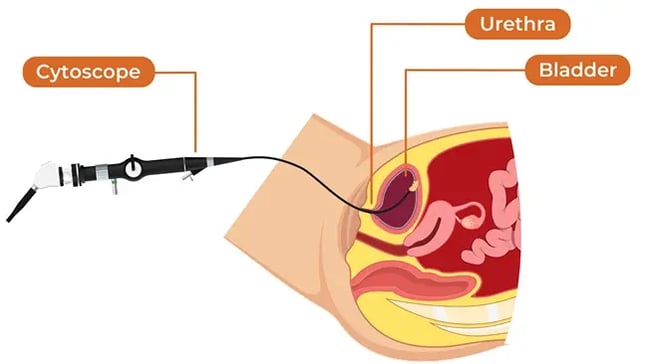
Cystoscopy uses a thin instrument to inspect the bladder through the urinary passage. It may be performed with local anaesthetic gel or as part of a procedure under anaesthesia. If an abnormal area is found, tissue may need to be removed or sampled for laboratory examination. That information helps distinguish cancer from other changes and guides any subsequent treatment.
What happens if cancer is found?
The next step depends on the type and depth of the abnormal tissue. Some tumours involve the inner lining, while others extend into the bladder muscle and need a different treatment pathway. Your team will explain these terms before discussing options. Seek urgent care if clots stop you from passing urine or if bleeding is substantial; otherwise, arrange prompt assessment rather than waiting for another episode.
Your next step
At DRHC, Dr. Mansour Masoumi, Specialist Urologist, can review your symptoms, previous results, and personal priorities. Bring a list of medicines and any questions you want answered. The final choice of investigation or treatment follows a full assessment and a discussion with your doctor about what is appropriate for you.
Disclaimer
This article provides general information only and does not replace a medical consultation. Do not use it to diagnose yourself, choose a procedure, or start, stop, or change treatment. Decisions about your care should be made with your doctor after an individual assessment.

Learn more about our Editorial Process.
Topic: Urology Blogs



Leave a comment