

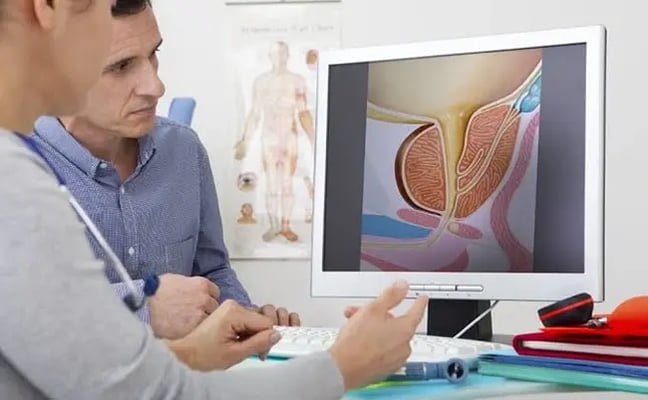
Seeing a raised PSA on a blood-test report can lead to an immediate question: does this mean prostate cancer? The answer is that more information is needed. PSA is a useful clue, not a diagnosis. A careful sequence of checks helps your doctor decide whether the result reflects a temporary change, benign prostate enlargement, or something that needs closer investigation.
Start with the context
Your doctor will look at previous PSA results, symptoms, prostate size, family history, and medicines. Recent urinary infection, difficulty emptying the bladder, or procedures involving the urinary tract may matter. Tell the team about these events rather than trying to interpret the number in isolation. A trend can be useful, but it still needs clinical interpretation.
Why might the blood test be repeated?
In suitable circumstances, a repeat PSA helps check whether the level remains raised. The timing depends on the reason for concern and any recent infection or treatment. You will be given preparation instructions where needed. Repeating a test is not necessarily a delay in care; it can be a deliberate step towards a clearer decision.
What can an MRI add?
A prostate MRI produces detailed pictures and can show areas that deserve closer attention. It helps plan a biopsy if one is recommended. A scan report may use technical terms or a scoring system, but your doctor should explain what they mean for your next step. A scan without a suspicious area does not automatically end the assessment for everyone.
When is a biopsy considered?
A biopsy takes small samples of prostate tissue for examination in a laboratory. It can establish whether cancer is present and provide information about its likely behaviour. Samples may target an MRI finding and sometimes include other parts of the prostate. Many centres use a transperineal approach, passing needles through the skin between the scrotum and anus; the team will explain the planned method.
Preparing for the results discussion
Ask how you will receive the results and who to contact with questions. If a biopsy shows cancer, further decisions depend on its grade, extent, and your health. If it does not, the doctor may still recommend follow-up. Do not stop blood-thinning medicines yourself before any procedure; the relevant doctors will provide an individual plan.
Your next step
At DRHC, Dr. Mansour Masoumi, Specialist Urologist, can review your symptoms, previous results, and personal priorities. Bring a list of medicines and any questions you want answered. The final choice of investigation or treatment follows a full assessment and a discussion with your doctor about what is appropriate for you.
Disclaimer
This article provides general information only and does not replace a medical consultation. Do not use it to diagnose yourself, choose a procedure, or start, stop, or change treatment. Decisions about your care should be made with your doctor after an individual assessment.

Learn more about our Editorial Process.
Topic: Urology Blogs





Leave a comment