

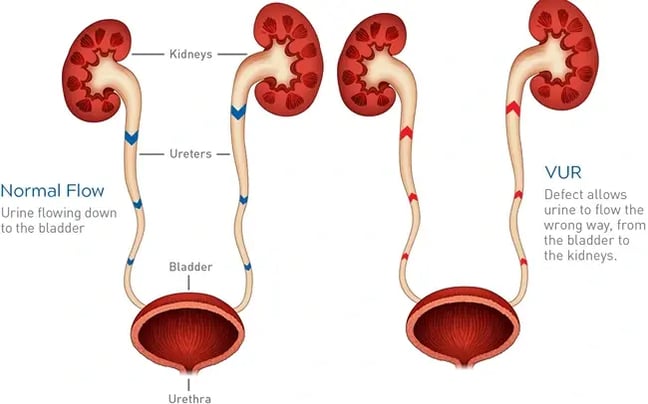
Many children with vesicoureteral reflux can be managed without an immediate procedure. This does not mean ignoring the condition. A useful plan combines scheduled review, rapid assessment of possible infection and attention to bladder and bowel habits. Preventive antibiotics are appropriate for some children, while others can be monitored without daily medicine after specialist assessment.
What monitoring is looking for
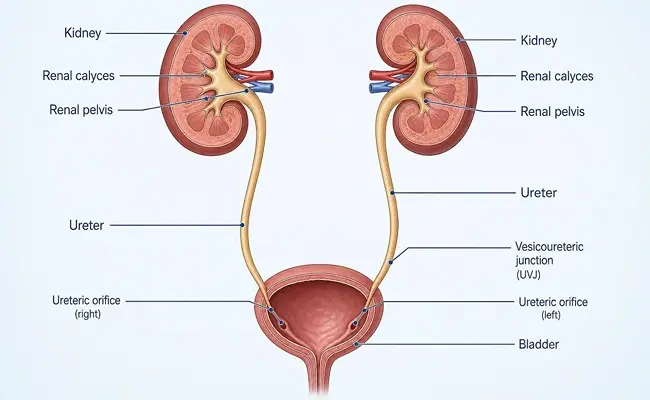
Normally, each ureter carries urine from a kidney to the bladder, and its passage through the bladder wall helps prevent backward flow. In primary VUR, this valve mechanism has not developed effectively. Secondary reflux can be linked to difficulty emptying the bladder or raised bladder pressure. The diagnosis is not caused by ordinary parenting, and families cannot determine the mechanism from symptoms alone.
How does it come to attention
Review checks whether infections are occurring, whether kidneys are growing appropriately and whether reflux remains clinically important. The interval and type of imaging vary with the original findings and subsequent progress. Bring earlier reports so results can be compared. Blood pressure, urine protein or kidney function may also need monitoring, particularly where kidney abnormalities have been identified; ask which checks apply to your child.
The role of preventive antibiotics
A small regular antibiotic dose may be prescribed to reduce infection risk in selected children. It does not repair the valve mechanism or guarantee that infection cannot occur. The clinician weighs likely benefit against side effects and antibiotic resistance, considering age, reflux severity, infections and bladder function. Confirm the medicine, dose, review date and what to do if doses are missed or the child vomits.
Have an infection action plan
Know how to arrange a suitable urine sample when a child develops unexplained fever or urinary symptoms. Ideally, samples are collected before treatment when this is feasible, but an unwell child must not have urgent care delayed. Tell the treating clinician about VUR, any preventive antibiotic and previous cultures. Do not simply increase the preventive dose or start leftover medicine at home.
Bladder and bowel care
For toilet-trained children, regular relaxed toilet visits and enough daytime fluid help establish consistent emptying habits. Avoid making the child hold urine to train a larger bladder. Constipation should be actively addressed, including hard stools, painful bowel movements and soiling that may otherwise be missed. Ask for a school toilet-access plan if a child delays voiding because lessons, privacy or unfamiliar toilets make it difficult.
When the plan needs reassessment
A fever-associated infection despite preventive treatment, new kidney concerns, troublesome side effects or persistent high-risk reflux may lead to discussion of intervention. The goal is to change a risk that matters for the child, not merely obtain a different scan result. Fever with vomiting, poor drinking, marked drowsiness or reduced urine needs urgent assessment; do not wait for the next monitoring appointment when your child becomes unwell.
Your child's next step
A consultation through DRHC with Dr. Mansour Masoumi, Specialist Urologist, can help clarify your child’s findings and arrange the appropriate paediatric specialist pathway. Bring previous reports and a list of your questions. The final treatment is chosen after individual assessment, with the child’s age, symptoms, and family circumstances taken into account.
Disclaimer
This article is educational and does not replace a medical consultation. Do not use it for self-diagnosis or self-treatment, or to start, stop, or change your child’s medicines. Follow the advice from the clinician responsible for your child’s care.

Learn more about our Editorial Process.
Topic: Urology Blogs




Leave a comment