

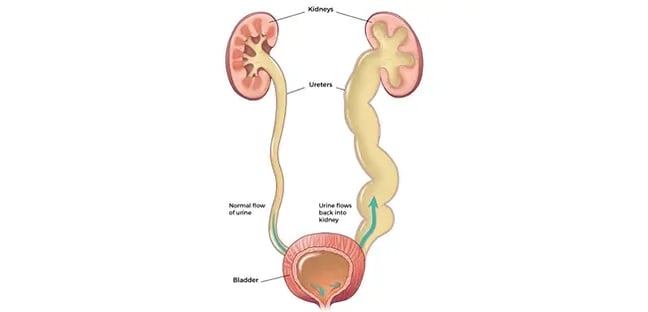
A procedure for vesicoureteral reflux aims to reduce backward urine flow from the bladder towards the kidneys. It may be discussed when infections continue, kidney health is a concern or the chances of safe improvement with observation are less favourable. The main choices are endoscopic injection and ureteric reimplantation, which have different recovery demands and likelihoods of requiring further treatment.
Clarify the reason for intervention
Before choosing an operation, the specialist reviews reflux grade, kidney findings, confirmed infections and bladder and bowel function. A child with constipation or dysfunctional emptying may still need those problems treated alongside a procedure. Ask what the intervention is expected to change: fewer serious infections, better protection of kidney function or correction of persistent reflux. Existing kidney scars are not erased by repairing reflux.
Endoscopic injection
Under anaesthesia, a small telescope is passed through the urethra into the bladder. The surgeon injects a bulking material near the ureteric opening to support the valve mechanism. There is usually no abdominal incision. Suitability depends on anatomy and the type of reflux. Reflux may persist or recur, and a repeat injection or another operation can be needed. Discuss the material being used and the planned follow-up.
Ureteric reimplantation
This operation changes the way the ureter passes through the bladder wall to create a more effective anti-reflux mechanism. It is a larger procedure than an injection and may involve an abdominal incision or selected minimally invasive techniques in experienced centres. The surgeon should explain which approach is proposed and why. A newer or smaller-incision technique is not automatically the best option for every child.
Preparation and early recovery
Follow the hospital’s fasting and medicine instructions, and report recent fever or a possible infection before surgery. Depending on the procedure, your child may temporarily have a bladder catheter, a stent or a drain. Ask how each will be managed and removed. Pain relief, length of stay and return to school vary. Written instructions should cover washing, activity, antibiotics and a contact number for unexpected symptoms.
Benefits, risks and continued review
Possible problems include bleeding, infection, persistent reflux, drainage obstruction and temporary difficulty emptying the bladder. Their relevance differs between techniques and children. Follow-up imaging checks the outcome and drainage; surgery does not remove every future risk of a urinary infection. Seek prompt advice for fever, increasing pain or worsening urinary symptoms. Inability to pass urine, persistent vomiting, reduced output or an unusually drowsy and unwell child needs urgent assessment.
Your child's next step
A consultation through DRHC with Dr. Mansour Masoumi, Specialist Urologist, can help clarify your child’s findings and arrange the appropriate paediatric specialist pathway. Bring previous reports and a list of your questions. The final treatment is chosen after individual assessment, with the child’s age, symptoms, and family circumstances taken into account.
Disclaimer
This article is educational and does not replace a medical consultation. Do not use it for self-diagnosis or self-treatment, or to start, stop, or change your child’s medicines. Follow the advice from the clinician responsible for your child’s care.

Learn more about our Editorial Process.
Topic: Urology Blogs



Leave a comment