

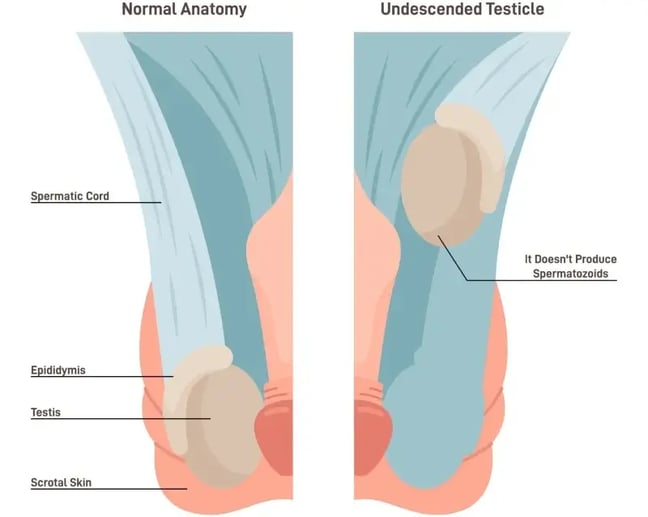
When a baby has an undescended testicle, parents may be told to return for another check. Observation can be sensible in the early months, but it should have a clear timetable. Understanding when to review and when to refer helps families avoid both unnecessary worry and an open-ended wait.
The early months have a purpose
A testicle that has not reached the scrotum at birth may complete its descent during early infancy. The baby's doctor checks its position at follow-up visits rather than relying only on how the scrotum looks. Premature babies need their corrected age considered. Keep the recommended appointments even if your baby is comfortable and feeding normally.
When referral should happen
If the testicle is still undescended by about six months of corrected age, a specialist should assess the next step. Many pathways arrange referral earlier so treatment can be planned without delay. The aim is usually to complete appropriate surgery during infancy, commonly before the first birthday and by eighteen months at the latest when feasible. Your specialist will explain the timing for your child.
Why waiting for school age is unhelpful
The scrotum provides a cooler environment suited to testicular development. Bringing a persistent undescended testicle into position early supports its future health and makes examination easier. This is why follow-up is based on age and findings, not on whether pain develops. An older child whose testicle has newly moved upwards also needs referral rather than another prolonged period of observation.
Different findings need different plans
A retractile testicle is generally followed by regular examinations rather than immediate surgery. A testicle that cannot be felt, or both testicles being affected, may need a different specialist work-up. Tell the doctor about any other genital difference or previous groin operation. A scan is not a substitute for referral when the examination already raises concern.
Making appointments more useful
Write down what you were told at earlier visits and bring the child's records. Ask whether the testicle is retractile, undescended, or ascending; when the next review should happen; and who will arrange it. If a referral has been made but no appointment arrives, contact the referring clinic. A clear plan is more useful than checking the scrotum repeatedly at home.
Planning your child's care
Dr. Mansour Masoumi, Specialist Urologist, can review your child through DRHC and coordinate the appropriate paediatric assessment. The final timing and treatment are decided after examination and discussion with the surgical team. An appointment should also make clear what happens next, who will follow your child, and how to raise a new concern.
Disclaimer
This article is for education only and does not replace medical advice. It is not intended for self-diagnosis or self-treatment. Do not start, stop, or change treatment based on this information; discuss your care with a qualified clinician.

Learn more about our Editorial Process.
Topic: Urology Blogs





Leave a comment