

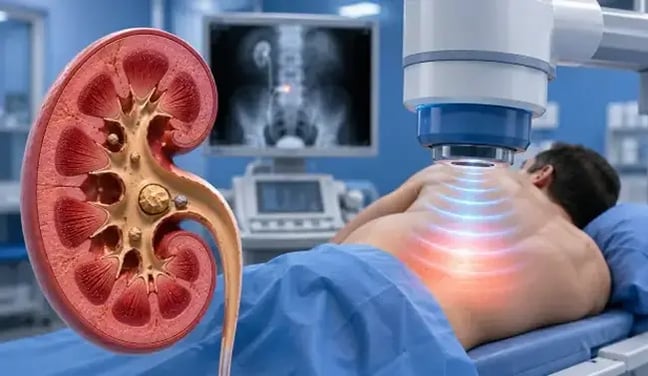
Shockwave lithotripsy breaks urinary stones using energy directed from outside the body. Often shortened to SWL or ESWL, it can treat selected stones in the kidney or ureter, the tube linking the kidney and bladder. There is no surgical incision for standard treatment. However, the broken pieces still need to pass, so a convenient treatment session does not always mean a quick end to the stone problem.
How the stone is targeted
You lie on a treatment couch while ultrasound or X-rays locate the stone. A treatment head makes contact with the skin, and focused pulses pass through to the stone. You may hear clicking and feel repeated tapping or discomfort. Pain relief is arranged, and sedation is sometimes used. The team adjusts treatment and positioning rather than simply applying the same energy to every patient.
Which stones are suitable?
The scan helps assess size, position and likely hardness. Small or moderate stone burdens may respond well, while hard stones, larger stones and stones in some lower kidney positions may be harder to clear. Body shape and the distance from skin to stone can affect targeting. A stone that can be broken may still leave fragments that are difficult to pass. Ask about both fragmentation and the chance of becoming stone-free.
When another approach is safer
SWL is not suitable during pregnancy or with an untreated urinary infection. Bleeding disorders and blood-thinning medicines need careful planning; never stop prescribed medicines independently. Obstruction below the stone can prevent fragments draining. Tell the team about a pacemaker or defibrillator so specialist precautions can be considered. An infected, blocked kidney needs urgent drainage and antibiotics rather than routine elective shockwave treatment.
Comparing the treatment choices
Ureteroscopy reaches stones through the urinary passage, often using a laser and sometimes a temporary stent. PCNL reaches larger kidney stones through a small skin opening. These approaches may offer better clearance for certain stones but involve different anaesthesia, risks and recovery. Observation can suit some small, stable stones. SWL may need repeat sessions or a later operation, and this possibility should be part of the initial discussion.
After the appointment
Many adults go home the same day. Arrange transport if sedation or strong pain relief is used, and follow the instructions on driving. Blood-tinged urine and discomfort can occur as fragments pass. Use the prescribed pain plan and the fluid intake recommended for your health; forcing excessive water is not a substitute for assessment. The team may ask you to collect fragments for analysis and explain whether any medicine could help their passage.
Knowing when to seek help
A line of fragments can block the ureter even after apparently successful treatment. Seek urgent assessment for fever, chills, feeling very unwell, severe or worsening flank pain, repeated vomiting or markedly reduced urine. Heavy bleeding or faintness also needs prompt attention. Attend the planned imaging and review: less pain does not prove complete clearance. Remaining stones and your future prevention plan should both be addressed.
Discussing your options through DRHC
A consultation with Dr. Mansour Masoumi, Specialist Urologist, can help connect these choices with your symptoms, previous treatment, and practical priorities. Bring relevant results and a current medicine list. Care can be discussed and arranged through DRHC; the final treatment is chosen after an individual assessment and an explanation of the likely benefits, limitations, and alternatives.
Disclaimer:
This article is educational and does not replace a medical consultation. Do not use it for self-diagnosis or self-treatment, or to start, stop, or change medicines. Your doctor should guide decisions after assessing your circumstances.

Learn more about our Editorial Process.
Topic: Urology Blogs



Leave a comment