

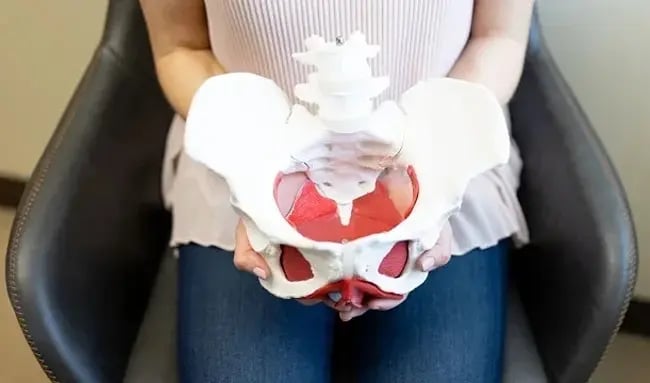
Pelvic reconstruction restores support when organs such as the bladder, womb or bowel bulge down towards the vagina. This is called pelvic organ prolapse. It may cause a vaginal bulge, dragging discomfort or difficulty emptying the bladder or bowel. Reconstruction is not one operation: the best plan depends on which areas have lost support, how much symptoms affect you, and your preferences.
Assessment before choosing surgery
A pelvic examination identifies the compartments involved and whether the top of the vagina or womb has descended. You may be asked about urinary leakage, bowel symptoms, sexual comfort, previous operations, and pregnancy plans. A bladder diary or emptying check can be helpful; further tests are selected when they can influence care. The size of a prolapse alone does not determine whether surgery is necessary or predict improvement in every symptom.
Options that do not involve an operation
Some prolapses can be observed if symptoms are manageable. Pelvic floor physiotherapy, reducing constipation, and addressing chronic coughing may help. A vaginal pessary supports the prolapse and can be a longer-term choice, with regular checks and care. Vaginal oestrogen may improve menopausal tissue discomfort in suitable patients. These choices remain relevant even if an operation is eventually considered, and should be discussed without assuming surgery is inevitable.
Repair using your own tissues
Native-tissue vaginal repair uses stitches to support weakened vaginal walls without placing synthetic mesh in that repair. Support at the top may involve fixing tissue to a pelvic ligament. Operations can sometimes preserve the womb; hysterectomy is not an automatic requirement. The right combination depends on the prolapse pattern. Native-tissue surgery still carries risks such as bleeding, infection, altered bladder emptying, discomfort during sex and recurrence.
When sacrocolpopexy may be discussed
Sacrocolpopexy supports the top of the vagina, usually after hysterectomy, by attaching it to strong tissue over the sacrum using mesh. It may be performed through keyhole or open abdominal surgery. Sacrohysteropexy is a related womb-preserving approach. Abdominally placed prolapse mesh differs from mesh placed through a vaginal incision and from a small incontinence sling. Each has distinct evidence, risks and counselling requirements; they should not be described as interchangeable.
Balancing benefit, mesh, and future symptoms
A repair can improve the bulge while some bladder or bowel symptoms remain. Stress urinary leakage may appear when a prolapse that was kinking the urethra is corrected. Mesh can cause exposure, erosion, or persistent pain, and complete removal may be difficult. Native-tissue repairs can also recur. Discuss whether continence surgery should be separate or combined and how your priorities about vaginal intercourse, womb preservation, and further treatment influence the plan.
Recovery and ongoing review
The team will explain hospital stay, catheter checks, constipation prevention, and a gradual return to work, lifting, exercise, and sex. Seek urgent help for inability to urinate, fever with feeling unwell, heavy bleeding, or severe, increasing pain. Breathlessness or a painful, swollen leg also requires urgent assessment after surgery. Attend follow-up and report recurrent bulging, persistent pain, discharge, or bleeding. Surgery improves support, but cannot guarantee that prolapse will never return.
Discussing your options through DRHC
A consultation with Dr. Mansour Masoumi, Specialist Urologist, can help connect these choices with your symptoms, previous treatment, and practical priorities. Bring relevant results and a current medicine list. Care can be discussed and arranged through DRHC; the final treatment is chosen after an individual assessment and an explanation of the likely benefits, limitations, and alternatives.
Disclaimer:
This article is educational and does not replace a medical consultation. Do not use it for self-diagnosis or self-treatment, or to start, stop, or change medicines. Your doctor should guide decisions after assessing your circumstances.

Learn more about our Editorial Process.
Topic: Urology Blogs




Leave a comment