

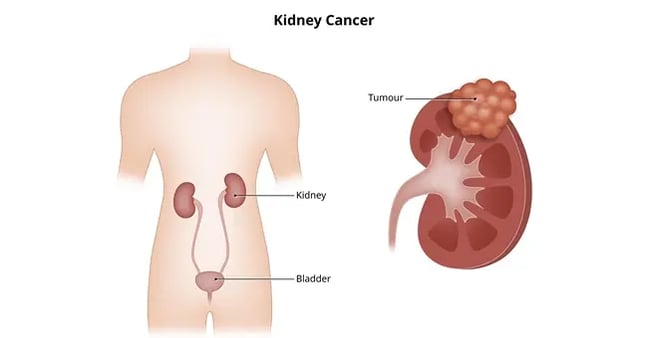
A kidney lump is often discovered unexpectedly during a scan for another reason. The report may call it a mass or lesion, but these words do not automatically mean cancer. Some findings are simple cysts; others need more detailed imaging. The first task is to understand exactly what the scan has shown before discussing treatment.
What does a kidney mass mean?
A mass is an area that looks different from the surrounding kidney. It may be fluid-filled, solid, or a mixture of both. A simple cyst is usually different from a complex cyst or a solid growth. Your doctor looks at the characteristics of the finding, not just its size, and may ask a radiologist to review the images.
Symptoms are not always present
Many kidney cancers are found before they cause symptoms. Possible changes include blood in the urine, persistent pain in the side, or an unexplained change in general health. These symptoms can also have other causes. Visible blood deserves assessment even when it disappears. The absence of symptoms does not determine whether a scan finding needs follow-up.
Why further imaging may help
CT or MRI can provide more detail about a kidney lesion, nearby structures, and the rest of the abdomen. Sometimes contrast is used to show how a mass behaves compared with normal tissue. The team checks kidney function and relevant medical history when planning the test. Previous scans are especially useful because they may show whether the finding has changed.
Will a biopsy be needed?
A needle biopsy can help in selected circumstances, particularly when its result would change the treatment plan. It is not required before every kidney operation. Your doctor may already have enough imaging information to recommend a pathway, or may need tissue to clarify an uncertain finding. Ask what a biopsy would add in your particular situation.
From diagnosis to a plan
If cancer is suspected or confirmed, decisions consider the appearance and position of the lesion, the health of both kidneys, and your overall fitness. Monitoring, an ablation procedure, or surgery may be discussed for a small localised mass. Larger or more extensive cancers need a different assessment. Bring the original scan images if available, not only the written report, so the team can review the findings directly.
Your next step
At DRHC, Dr. Mansour Masoumi, Specialist Urologist, can review your symptoms, previous results, and personal priorities. Bring a list of medicines and any questions you want answered. The final choice of investigation or treatment follows a full assessment and a discussion with your doctor about what is appropriate for you.
Disclaimer
This article provides general information only and does not replace a medical consultation. Do not use it to diagnose yourself, choose a procedure, or start, stop, or change treatment. Decisions about your care should be made with your doctor after an individual assessment.

Learn more about our Editorial Process.
Topic: Urology Blogs




Leave a comment