

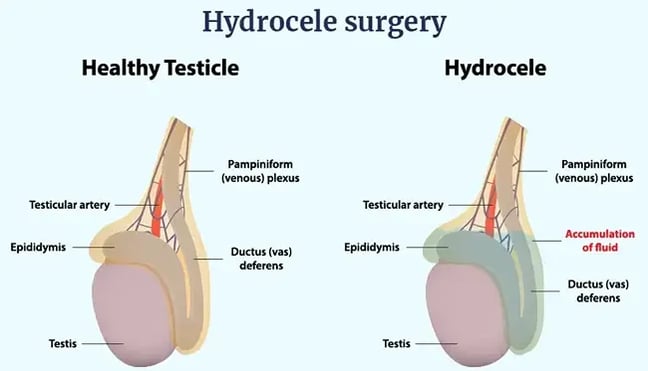
Avoiding an operation can be reasonable for an adult hydrocele when the diagnosis is confirmed, and the swelling causes little difficulty. Observation is an active decision with an agreed plan for changes, rather than ignoring the scrotum indefinitely. It is also useful to understand why removing fluid through a needle usually provides a different result from surgical repair.
Begin with a secure diagnosis
A clinician should examine a new swelling and decide whether an ultrasound is needed. This matters particularly if the testicle is difficult to feel, the swelling is changing, or there is a separate lump. Do not choose observation solely because an online description sounds familiar. Ask whether any associated inflammation, injury, or other cause needs attention before the fluid collection itself is managed.
Make observation practical
Agree on which changes should prompt another appointment and whether a planned review is useful. Note meaningful changes in comfort, size, and daily function without repeatedly squeezing the swelling. Suitable supportive underwear may ease a dragging sensation. Adjust activities that cause discomfort while keeping normal movement where possible. Pain medicines should be checked against your other conditions and prescriptions rather than taken continuously without reviewing the cause of pain.
What aspirations can and cannot do
Aspiration means withdrawing fluid using a needle. It does not usually correct the covering that allows fluid to accumulate, so the swelling can refill quickly. Bleeding and infection are possible. Repeated drainage is therefore not a routine substitute for definitive repair. It may occasionally be discussed when an operation is unsuitable, but the likely temporary benefit and the need for further treatment should be explicit.
Ask carefully about sclerotherapy
Some services offer drainage followed by an agent intended to make the fluid-producing space close. This is not the same as simple aspiration, and it is not suitable for every patient. Availability, experience, and treatment protocols vary. Ask about recurrence, discomfort, possible inflammation, and repeat sessions. Do not assume that a smaller procedure is necessarily the most effective or most appropriate long-term choice for your situation.
Know when to reconsider
Increasing interference with walking, clothing, work, or sex can justify revisiting surgery even if observation was originally sensible. New pain, redness, fever, or a firm lump needs reassessment rather than another routine drainage appointment. Sudden severe pain requires emergency care. A useful non-surgical plan includes a clear route back to review and recognises that your preferences can change as the burden of symptoms changes over time.
Discuss your next step
A consultation with Dr. Mansour Masoumi, Specialist Urologist, through DRHC can help you weigh symptom monitoring against the limitations of drainage and the potential role of repair. The final treatment is chosen after an individual assessment and discussion of your preferences. Bring previous results and a medicine list so the advice can be based on your own circumstances.
Disclaimer
This article is for education and does not replace a medical consultation. Do not use it for self-diagnosis or self-treatment, or to start, stop, or change medicines. Your doctor should guide care after considering your symptoms, medical history, and individual circumstances.

Learn more about our Editorial Process.
Topic: Urology Blogs




Leave a comment