

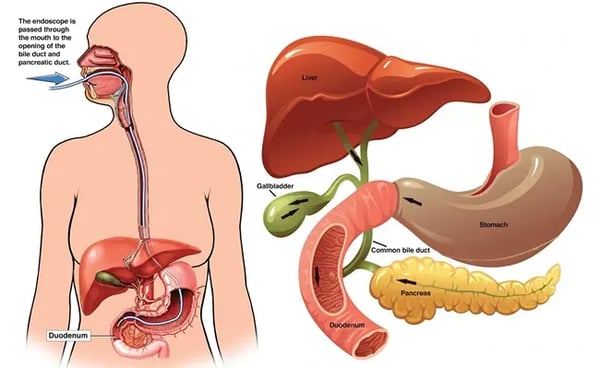
If you have been told that you need an ERCP (Endoscopic Retrograde Cholangiopancreatography), it is natural to have questions and concerns. Many patients in Dubai are unfamiliar with this specialised procedure and wonder why it is recommended instead of a regular endoscopy or imaging scan. ERCP is both a diagnostic and therapeutic procedure that allows specialists to identify and treat problems affecting the bile ducts and pancreas without the need for traditional surgery.
At the Dr. Rami Hamed Center (DRHC) Dubai Gastroenterology Clinic, ERCP is performed by experienced gastroenterologists using advanced endoscopic technology to diagnose and manage complex biliary and pancreatic conditions.
What Is ERCP?
ERCP combines endoscopy with X-ray imaging to examine the bile ducts, gallbladder, pancreas, and pancreatic ducts. During the procedure, a flexible endoscope is passed through the mouth into the stomach and the first part of the small intestine. A special contrast dye is then injected into the bile or pancreatic ducts, allowing detailed images to be obtained while treatment can often be performed during the same procedure.
Unlike many imaging tests, ERCP not only identifies the cause of a problem but can also treat it immediately.
When Is ERCP Recommended?
Your gastroenterologist may recommend ERCP if you have:
- Gallstones are blocking the bile duct.
- Persistent jaundice (yellowing of the skin or eyes).
- Abnormal liver function tests suggesting bile duct obstruction.
- Blocked or narrowed bile ducts (biliary strictures).
- Suspected pancreatic duct blockage.
- Recurrent or unexplained pancreatitis.
- Bile duct leaks following surgery or injury.
- Suspicion of bile duct or pancreatic tumours requiring further evaluation.
What Can ERCP Treat?
One of the major advantages of ERCP is that treatment can often be performed during the same procedure, avoiding additional interventions.
ERCP can be used to:
- Remove bile duct stones.
- Open narrowed bile ducts.
- Insert temporary or permanent stents to improve bile drainage.
- Treat bile leaks.
- Collect tissue samples or brushings for laboratory analysis.
- Relieve blockage caused by inflammation or tumours.
How Is ERCP Different from Gastroscopy or EUS?
A gastroscopy examines the lining of the oesophagus, stomach, and upper small intestine, but does not directly treat bile duct or pancreatic duct disorders.
Endoscopic Ultrasound (EUS) provides highly detailed images of the pancreas, bile ducts, and surrounding organs and may help diagnose abnormalities. ERCP, on the other hand, is mainly performed when treatment—such as removing stones or inserting a stent—is required.
What Should You Expect During ERCP?
- You will be asked to fast before the procedure.
- Sedation or anaesthesia is administered to keep you comfortable.
- The procedure usually takes between 30 and 90 minutes, depending on the complexity.
- If a blockage or stone is identified, treatment can often be completed immediately.
- Most patients are monitored after the procedure and may return home the same day or stay overnight if observation is required.
Is ERCP Safe?
ERCP is a well-established procedure performed worldwide by experienced gastroenterologists. Like any medical procedure, it carries some risks, including pancreatitis, bleeding, infection, or perforation, but these complications are uncommon. Your specialist will carefully assess whether the benefits outweigh the risks and explain everything before the procedure.
When Should You See a Gastroenterologist?
You should seek specialist assessment if you develop persistent upper abdominal pain, jaundice, recurrent pancreatitis, unexplained abnormal liver blood tests, fever associated with jaundice, or suspected bile duct obstruction. Early diagnosis and treatment can help prevent serious complications and improve long-term outcomes.
At DRHC Dubai, patients benefit from a comprehensive range of advanced digestive investigations and treatments, including ERCP, Endoscopic Ultrasound (EUS), Gastroscopy, Colonoscopy, Capsule Endoscopy, and specialised care for hepatobiliary and pancreatic disorders.

Learn more about our Editorial Process.
Topic: Gastroenterolgy Endoscopy



Leave a comment