

Difficulty swallowing can be worrying and may affect your ability to eat, drink, and enjoy daily life. Some people notice that food feels as though it gets stuck in the throat or chest, while others experience discomfort every time they swallow. Although these symptoms can have many causes, one common reason is a narrowing, also called a stricture, within the digestive tract.
At the Dr. Rami Hamed Center (DRHC) Dubai Gastroenterology Clinic, advanced diagnostic and therapeutic endoscopy helps identify the cause of swallowing difficulties and provides minimally invasive treatments such as Endoscopic Dilatation of Gastrointestinal Strictures to improve swallowing and restore comfort.
What Is Endoscopic Dilatation?
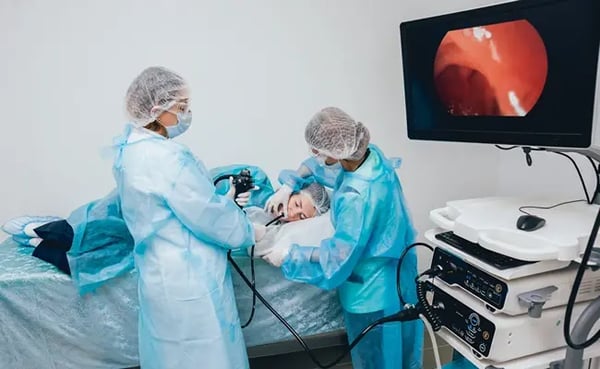
Endoscopic dilatation is a minimally invasive procedure used to gently widen narrowed areas of the oesophagus, stomach, or other parts of the digestive tract. Using a flexible endoscope, your gastroenterologist can carefully stretch the narrowed section with specialised balloons or dilators, allowing food and liquids to pass more easily.
The procedure is commonly performed during an upper gastroscopy and usually does not require any surgical incisions.
When Is Endoscopic Dilatation Recommended?
Your gastroenterologist may recommend endoscopic dilatation if you experience:
- Difficulty swallowing (dysphagia).
- Food becoming stuck while eating.
- Pain when swallowing.
- Narrowing caused by long-standing gastroesophageal reflux disease (GERD).
- Scar tissue after surgery or previous inflammation.
- Narrowing following radiation therapy.
- Benign oesophageal strictures.
- Certain digestive tract narrowings caused by inflammatory conditions.
What Causes Narrowing of the Oesophagus?
Several conditions can lead to oesophageal strictures, including:
- Chronic acid reflux causing scar formation.
- Repeated inflammation of the oesophagus.
- Previous surgery involving the oesophagus or stomach.
- Injury from accidentally swallowing corrosive substances.
- Radiation treatment to the chest.
- Certain benign or malignant growths requiring specialist assessment.
How Is the Cause Diagnosed?
Before recommending treatment, your gastroenterologist will determine why the narrowing has developed. Investigations may include:
- Gastroscopy to directly examine the oesophagus.
- Endoscopic Ultrasound (EUS) if deeper abnormalities require evaluation.
- Oesophageal Manometry if a swallowing or muscle disorder is suspected.
- Biopsy during endoscopy if tissue analysis is required.
What Happens During Endoscopic Dilatation?
- You will be asked to fast before the procedure.
- Sedation is usually given to keep you comfortable.
- A flexible endoscope is passed through the mouth into the oesophagus.
- The narrowed area is identified and gradually widened using specialised balloons or dilators.
- Most procedures are completed within 30 to 60 minutes.
- Patients are monitored after recovery from sedation before going home.
What Are the Benefits?
- Improves swallowing.
- Allows patients to eat and drink more comfortably.
- Minimally invasive with no external incisions.
- Usually performed as a day-case procedure.
- May avoid or delay the need for more invasive surgery.
Will More Than One Treatment Be Needed?
Some patients experience long-lasting improvement after a single dilatation, while others with chronic conditions may require repeat treatments over time. If narrowing is caused by ongoing acid reflux, treating the underlying acid reflux or GERD is important to reduce the chance of recurrence.
When Should You Seek Medical Advice?
You should arrange a specialist assessment if you experience persistent difficulty swallowing, repeated episodes of food sticking in the chest, unexplained weight loss, pain while swallowing, or frequent regurgitation. Early evaluation helps identify the underlying cause and prevents complications.
At DRHC Dubai, patients benefit from comprehensive digestive investigations and treatments, including Gastroscopy, Endoscopic Dilatation of Gastrointestinal Strictures, Oesophageal Manometry, Endoscopic Ultrasound (EUS), and personalised treatment for swallowing and motility disorders.

Learn more about our Editorial Process.
Topic: Gastroenterolgy Endoscopy



Leave a comment