

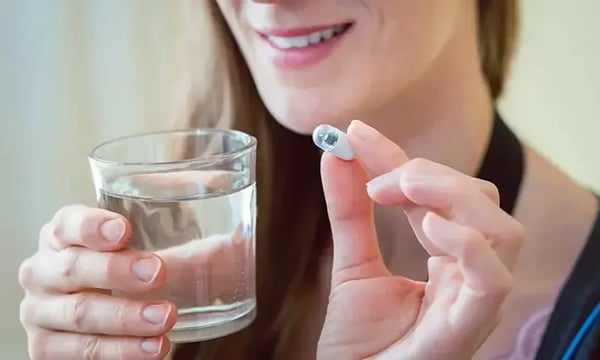
If you have ongoing digestive symptoms but routine investigations, such as a gastroscopy or colonoscopy, have not identified the cause, your gastroenterologist may recommend capsule endoscopy. This advanced diagnostic test allows doctors to examine areas of the small intestine that cannot be easily reached with conventional endoscopy. At Dr. Rami Hamed Center (DRHC) Dubai, capsule endoscopy is used to investigate unexplained digestive conditions while providing a comfortable, minimally invasive experience for patients.
What Is Capsule Endoscopy?
Capsule endoscopy involves swallowing a capsule about the size of a large vitamin pill. Inside the capsule is a tiny camera that captures thousands of images as it naturally passes through your digestive tract. These images are transmitted to a recorder worn on a belt, allowing your gastroenterologist to carefully examine the lining of the small intestine.
The capsule is disposable and usually passes naturally in the stool within one to three days without causing discomfort.
When Is Capsule Endoscopy Recommended?
Your doctor may recommend capsule endoscopy if you have:
- Persistent or unexplained gastrointestinal bleeding.
- Iron-deficiency anaemia with no clear cause after routine investigations.
- Suspected Crohn's disease affecting the small intestine.
- Long-standing abdominal pain or unexplained diarrhoea.
- Suspected small bowel tumours or polyps.
- Possible celiac disease when other tests are inconclusive.
- Evaluation of inherited polyposis syndromes.
Why Isn't Gastroscopy or Colonoscopy Always Enough?
A gastroscopy examines the oesophagus, stomach, and upper part of the small intestine, while a colonoscopy evaluates the large intestine and the end of the small bowel. However, most of the small intestine cannot be reached by either procedure. Capsule endoscopy fills this diagnostic gap by providing detailed images of the entire small bowel.
What Can Capsule Endoscopy Detect?
- Small bowel bleeding.
- Inflammation and ulcers.
- Early Crohn's disease.
- Small intestinal polyps.
- Tumours.
- Vascular abnormalities.
- Damage related to celiac disease.
What Should You Expect During the Procedure?
Capsule endoscopy is usually performed as a day procedure and does not require sedation.
- You will receive instructions about fasting before the test.
- The recording device will be attached before you swallow the capsule.
- You can usually continue light daily activities while the capsule records images.
- After approximately 8 hours, you will return the recording device for image analysis.
- The capsule passes naturally without needing to be retrieved.
Is Capsule Endoscopy Safe?
Capsule endoscopy is considered very safe and is well tolerated by most patients. In rare cases, the capsule may become temporarily stuck if there is a narrowing in the intestine. If your doctor suspects this risk, additional imaging or other investigations may be recommended before the procedure.
When Should You See a Gastroenterologist?
If you have persistent digestive symptoms despite previous investigations, unexplained anaemia, ongoing gastrointestinal bleeding, or suspected small bowel disease, further evaluation should not be delayed. Early diagnosis often leads to more effective treatment and can prevent complications.
At DRHC Dubai Gastroenterology Clinic, experienced specialists offer comprehensive assessment using advanced diagnostic techniques, including Capsule Endoscopy, Gastroscopy, Colonoscopy, Endoscopic Ultrasound (EUS), and Enteroscopy to accurately diagnose digestive disorders.

Learn more about our Editorial Process.
Topic: Gastroenterolgy Endoscopy




Leave a comment