

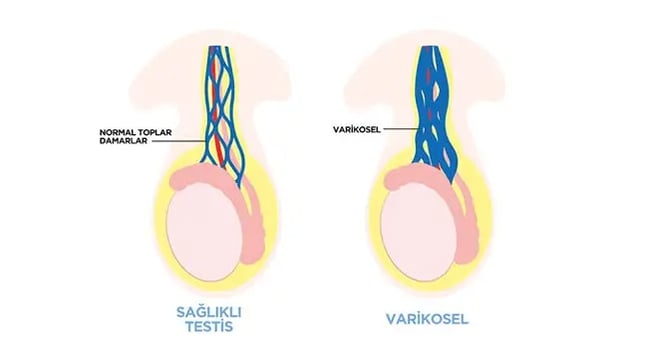
A varicocele is a group of enlarged veins around the testicle, rather like varicose veins in the leg. It may be discovered because of an ache, visible veins, or fertility testing. Finding one does not automatically mean you need an operation. The useful questions are whether the diagnosis is secure and whether it is affecting comfort, testicular development, or fertility.
What you might notice
Some men feel a dragging ache or heaviness, particularly after standing or exercise. Others have no symptoms at all. The veins may become more noticeable upright and less obvious when lying down. A varicocele is different from a firm lump within the testicle. New swelling should be examined rather than identified from an online photograph or the way it feels through clothing.
Why an examination matters
The urologist usually examines you standing and lying down and may ask you to bear down briefly. This helps establish whether veins are palpable and how the findings change with position. Testicular size and the rest of the scrotum are also assessed. Ultrasound may clarify uncertain findings, but a tiny vein abnormality detected only on scanning is not equivalent to a clinically palpable varicocele.
Connecting the finding with fertility
Many men with a varicocele conceive without treatment. In others, it can be associated with impaired sperm quality. Semen analysis helps assess the context, but cannot by itself assign responsibility for a couple's difficulty conceiving. Both partners' circumstances matter. Bring previous fertility investigations, the time you have been trying, and any relevant treatment plans so that advice reflects the whole situation rather than one scan result.
When further investigation is needed
An isolated right-sided clinical varicocele, a newly appearing swelling, or findings that do not fit the usual pattern may require additional investigation. The clinician decides this from the examination and history. Seek emergency care for sudden, severe testicular pain, especially with nausea or vomiting: a known varicocele must not be used to explain away possible torsion. A new hard lump also needs prompt examination.
Deciding what to do next
Observation is often reasonable when there is no significant discomfort or evidence of a relevant functional problem. Treatment may be considered for persistent troublesome symptoms or selected fertility situations, after discussing alternatives. Ask what improvement is being sought and how it will be measured. Repairing veins cannot guarantee pregnancy or remove every cause of scrotal pain, so expectations should be established before choosing a procedure.
Discuss your next step
A consultation with Dr. Mansour Masoumi, Specialist Urologist, through DRHC can help you understand the significance of a varicocele and decide whether observation or treatment fits your situation. The final treatment is chosen after an individual assessment and discussion of your preferences. Bring previous results and a medicine list so the advice can be based on your own circumstances.
Disclaimer
This article is for education and does not replace a medical consultation. Do not use it for self-diagnosis or self-treatment, or to start, stop, or change medicines. Your doctor should guide care after considering your symptoms, medical history, and individual circumstances.

Learn more about our Editorial Process.
Topic: Urology Blogs




Leave a comment