

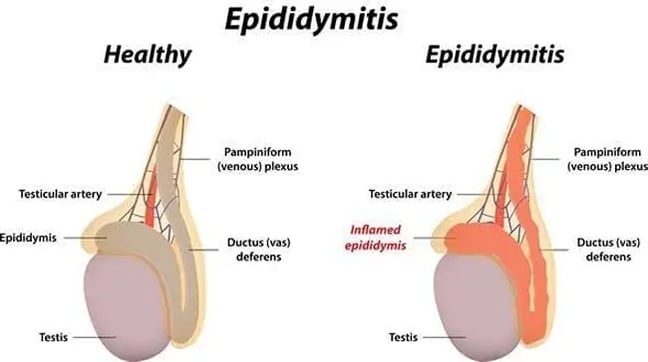
Recovery after epididymitis does not always follow the same timetable as the antibiotic course. Tenderness and swelling may take weeks to settle, even when the initial infection has been treated. What matters is the direction of change and whether the diagnosis still fits. Persistent symptoms deserve review, particularly if the pain is not improving or a discrete lump remains.
Separate slow improvement from deterioration
An improving ache is different from increasing pain, a new fever, or expanding redness. Seek urgent assessment for deterioration, feeling very unwell, or difficulty passing urine. Sudden severe pain remains an emergency, even after a recent infection diagnosis. Do not automatically label a new episode as a familiar flare. A clinician may need to reconsider torsion, an abscess, or another explanation for the symptoms.
Review the original evidence
Bring the original culture, STI results, antibiotic details, and any scan report. The clinician checks whether treatment matched the organism and whether partners received appropriate care when relevant. Persistent swelling after treatment may warrant examination and an ultrasound to look beyond infection. Repeating antibiotics without reviewing these details can delay the recognition of another cause and expose you to unnecessary unwanted effects from treatment.
Returning to ordinary activities
Supportive underwear, suitable pain relief, and temporarily adjusting activities can help while inflammation settles. Increase walking, work, and exercise according to comfort and the treating team's advice. If sitting, cycling or lifting repeatedly causes pain, describe that pattern rather than forcing your way through it. Keep a brief record of progress, including sleep and daily function, so follow-up considers practical recovery as well as tenderness.
Discuss fertility concerns proportionately
An episode does not establish that you are infertile. Significant inflammation, particularly involving both sides, can sometimes affect sperm production or transport. Whether semen analysis is useful depends on the history, examination, and pregnancy plans. Testing during or shortly after illness may not reflect your longer-term situation. Agree on suitable timing and interpretation with the clinician rather than treating one early result as a permanent prediction.
When pain becomes a longer-term problem
Ongoing scrotal pain can have several contributors, including residual inflammation or altered pain signalling. Further care should follow assessment rather than an assumption that bacteria are still present. Some patients need a coordinated pain plan or evaluation of urinary and pelvic symptoms. Ask what the review is trying to establish and when to return. A new firm testicular lump, persistent enlargement, or visible blood should always be reported promptly.
Discuss your next step
A consultation with Dr. Mansour Masoumi, Specialist Urologist, through DRHC Dubai, can help you assess persistent symptoms and discuss recovery, fertility questions, and the need for further investigation. The final treatment is chosen after an individual assessment and discussion of your preferences. Bring previous results and a medicine list so the advice can be based on your own circumstances.
Disclaimer
This article is for education and does not replace a medical consultation. Do not use it for self-diagnosis or self-treatment, or to start, stop, or change medicines. Your doctor should guide care after considering your symptoms, medical history, and individual circumstances.

Learn more about our Editorial Process.
Topic: Urology Blogs





Leave a comment