

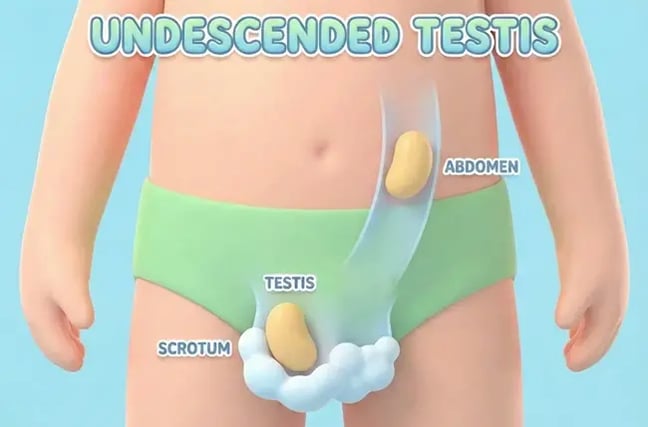
A parent may notice that one side of a baby's scrotum looks empty, or a doctor may mention an undescended testicle during a routine check. The next step is a careful examination. A testicle that has not reached its normal position and one that temporarily moves upwards can look similar, but they need different follow-up.
Where should the testicles be?
The testicles develop inside the abdomen before birth and usually move into the scrotum, the skin pouch below the penis. An undescended testicle has stopped somewhere along that journey or is outside its usual route. It may be felt in the groin, or it may be higher up and difficult to feel. Either one or both sides can be affected.
What is a retractile testicle?
A normal muscle reflex can pull a testicle upwards when a child is cold, anxious, or being examined. A retractile testicle can be gently brought into the scrotum by the clinician and remain there without tension. It usually does not need an operation, but regular checks matter because its position can change as the child grows.
Why an examination matters
Parents are not expected to make this distinction at home. A relaxed examination in a warm room helps the doctor assess the position, size, and movement of each testicle. Birth and earlier examination records are useful. A testicle previously recorded in the scrotum can sometimes move to a higher position later in childhood; this also needs review.
Does every child need a scan?
Usually, the examination provides the most useful information. An ultrasound arranged before specialist assessment may not answer whether a testicle is present or change the next step. If a testicle cannot be felt, the specialist will explain how it will be investigated. Both testicles being absent from the scrotum, especially with other genital differences, requires prompt specialist assessment.
What happens next?
Some testicles descend during the first months after birth. If a testicle remains undescended for around six months, allowing for prematurity, specialist treatment planning should not be delayed. Surgery called orchidopexy brings the testicle into the scrotum when appropriate. Sudden groin or scrotal pain, particularly with vomiting, needs urgent assessment rather than waiting for a routine appointment.
Arrange an individual review
At DRHC, Dr. Mansour Masoumi, Specialist Urologist, can assess a concern about testicular position and arrange the appropriate paediatric specialist pathway. Bring any newborn examination or previous clinic records. The decision between observation, regular review, and treatment follows your child's examination, age, and individual findings.
Disclaimer
This article is for education only and does not replace medical advice. It is not intended for self-diagnosis or self-treatment. Do not start, stop, or change treatment based on this information; discuss your care with a qualified clinician.

Learn more about our Editorial Process.
Topic: Urology Blogs




Leave a comment