

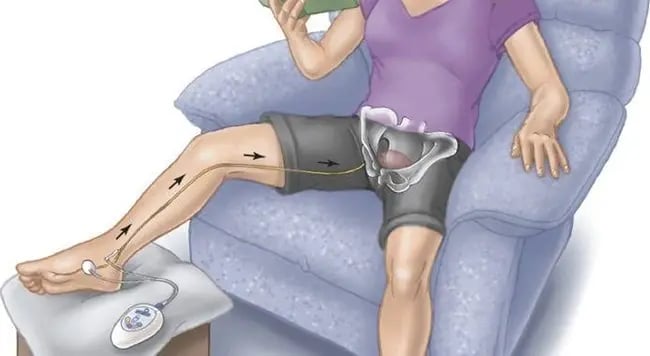
Tibial nerve stimulation is a treatment for overactive bladder symptoms such as urgency, frequent urination and leakage before reaching the toilet. It uses gentle electrical stimulation near the ankle to influence nerve pathways involved in bladder control. It can be useful when simpler measures have not provided enough relief, but it requires a course of treatment and often ongoing maintenance rather than a single lasting procedure.
Why a nerve near the ankle?
The tibial nerve connects with spinal nerve pathways that also help regulate bladder function. Stimulating it can modify bladder signalling without placing an implant beside the bladder. This is neuromodulation, meaning treatment that changes nerve activity. It does not physically strengthen the urinary outlet or remove obstruction. Assessment therefore matters: frequent urination from infection, poor emptying or another medical condition needs an appropriate diagnosis and management plan.
Needle and surface-electrode approaches
Percutaneous tibial nerve stimulation, or PTNS, uses a fine needle near the ankle and a surface electrode connected to a stimulator. Transcutaneous stimulation, or TTNS, uses electrodes on the skin. These are related approaches with different protocols and evidence; a home surface device should not automatically be described as equivalent to clinic PTNS. Ask which method is proposed, who will supervise it, and how the recommendation fits the relevant guidance and your symptoms.
What a typical course involves
A common PTNS schedule is a session lasting about 30 minutes each week for 12 weeks. You sit with your leg supported while stimulation is adjusted to a tolerable sensation, sometimes with tingling or a toe response. The exact protocol can vary. Regular attendance matters, so consider work, transport and travel before starting. Tell the clinician if stimulation is painful instead of assuming a stronger current must give a better result.
Measuring response and planning maintenance
A bladder diary before treatment records frequency, urgency, leakage, and sometimes fluid intake. Repeating it helps establish whether the course changes everyday life enough to be worthwhile. Benefit may develop gradually, and some people do not respond. If it helps, further sessions are often needed, sometimes approximately monthly, with individual adjustment. Ask what happens if an appointment is missed and how ongoing visits will be reviewed, rather than assuming the initial course finishes all treatment.
Suitability and possible side effects
Minor bruising, bleeding, discomfort, or skin irritation around the treatment site can occur. Tell the team about blood-thinning medicines, pregnancy, implanted electrical devices, nerve damage, and skin problems near the ankle. Restrictions depend on the method and equipment. PTNS does not usually carry the same retention risk as bladder Botox, but worsening emptying still needs assessment. New blood in the urine, recurrent infections, or unexplained pain should not simply be attributed to an overactive bladder.
How it compares with other options
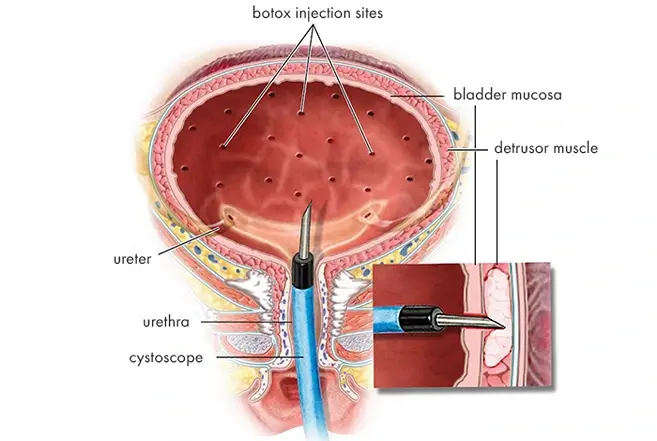
Bladder training, selected medicines, Botox injections, and sacral neuromodulation may also be relevant. PTNS avoids a permanent implant but has a substantial attendance commitment. Botox involves injections and possible catheterisation; sacral neuromodulation involves a test phase and potentially an implanted device. Continue the agreed bladder habits and medicines unless your team changes them. Seek urgent care for inability to pass urine, fever with urinary illness, or sudden neurological symptoms affecting bladder control.
Discussing your options through DRHC
A consultation with Dr. Mansour Masoumi, Specialist Urologist, can help connect these choices with your symptoms, previous treatment, and practical priorities. Bring relevant results and a current medicine list. Care can be discussed and arranged through DRHC; the final treatment is chosen after an individual assessment and an explanation of the likely benefits, limitations, and alternatives.
Disclaimer:
This article is educational and does not replace a medical consultation. Do not use it for self-diagnosis or self-treatment, or to start, stop, or change medicines. Your doctor should guide decisions after assessing your circumstances.

Learn more about our Editorial Process.
Topic: Urology Blogs



Leave a comment