

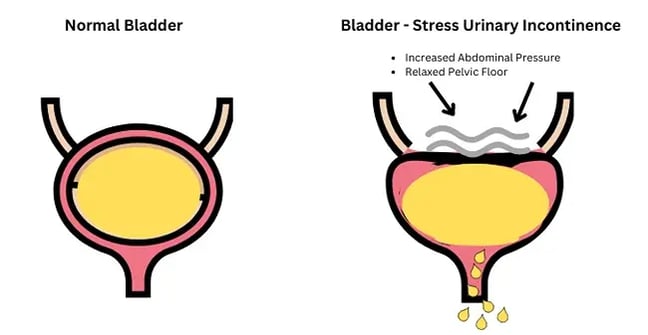
A cough, a laugh, or a short run should not have to come with a worry about leakage. Stress urinary incontinence means urine escapes when pressure inside the abdomen rises. The word stress describes physical pressure, rather than feeling anxious. It is common, but it is still worth discussing: practical treatments can help you feel more comfortable at work, during exercise, and in everyday life.
Why leakage happens
The pelvic floor and the tissues around the urine passage help keep the bladder outlet closed. Pregnancy and childbirth, ageing, changes around menopause, and previous pelvic surgery can affect this support. A long-standing cough or constipation may add pressure. These influences often overlap. Having leakage does not mean you have done something wrong, and it can affect women with different fitness levels and body shapes.
Recognising the pattern
Leakage when sneezing, jumping, or lifting suggests stress incontinence. A sudden need to rush to the toilet, followed by leakage, suggests urgency incontinence. Some women have both, called mixed incontinence. The distinction matters because treatment should match the symptoms that bother you most. Burning, pain, or blood in the urine needs assessment rather than being put down to a weak pelvic floor.
What an appointment involves
Your doctor will ask when leakage happens, how much it affects your activities, and whether you feel you empty your bladder fully. A urine sample and a short bladder diary may help. With your consent, an examination can check pelvic floor strength and look for prolapse. Most women do not need extensive scans at the first visit. More specialised tests are considered when the symptoms or planned treatment make them useful.
Finding an approach that fits
Supervised pelvic floor training is usually a useful starting point. A physiotherapist checks that you can tighten and relax the right muscles before building a programme. Managing constipation or a persistent cough can also help. Pads can provide reassurance while treatment is underway. If leakage remains troublesome, options include urethral bulking injections or an operation to support the outlet. The right choice depends on your examination, previous treatments, future plans, and preferences, rather than how a procedure is advertised.
Your next step
At DRHC, Dr. Mansour Masoumi, Specialist Urologist, can review your symptoms, previous results, and personal priorities. Bring a list of medicines and any questions you want answered. The final choice of investigation or treatment follows a full assessment and a discussion with your doctor about what is appropriate for you.
Disclaimer
This article provides general information only and does not replace a medical consultation. Do not use it to diagnose yourself, choose a procedure, or start, stop, or change treatment. Decisions about your care should be made with your doctor after an individual assessment.

Learn more about our Editorial Process.
Topic: Urology Blogs



Leave a comment