


Pelvic floor exercises are often recommended for urine leakage, but doing more squeezes is not always the answer. The useful starting point is knowing whether you are using the right muscles and whether they can relax as well as tighten. A supervised programme turns a vague instruction to “do your exercises” into a practical plan for your symptoms and daily routine.
What the pelvic floor does
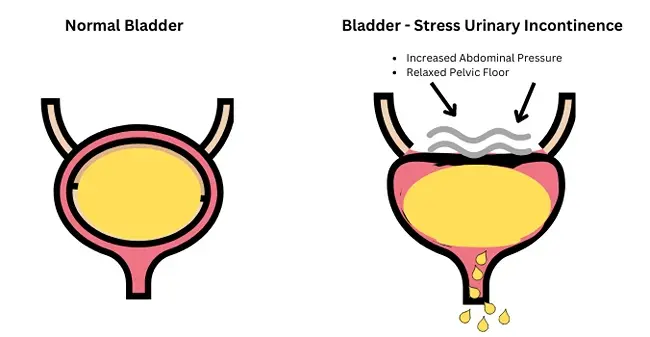
The pelvic floor is a group of muscles supporting the bladder, bowel, and pelvic organs. These muscles help keep urine in when you cough or move. They also need to release when you pass urine or open your bowels. A muscle can be weak, poorly coordinated, or too tense. Those situations need different approaches, which is why an initial assessment is valuable.
Learning the right movement
A trained clinician or pelvic health physiotherapist can check your technique, with your agreement. A correct contraction is a gentle inward lift rather than pushing down or holding your breath. Tensing the thighs and buttocks strongly may hide the fact that the pelvic floor is not doing the intended work. Some women benefit from feedback during a session to recognise the movement more clearly.
Building a realistic programme
Training usually combines different types of contraction and enough rest between them. The number, hold time, and starting position should suit your ability. Supervised training for stress leakage normally continues for several months, with review rather than a single instruction sheet. Linking exercises to an everyday routine can help with consistency. Progress may show as better control during a cough or fewer leaks on a walk before every symptom improves.
Bringing training into daily life
Your physiotherapist may teach you to activate the muscles just before coughing, lifting, or standing. Addressing constipation and a persistent cough reduces repeated strain. Gradually adapting exercise is often more useful than abandoning activity. Do not repeatedly stop your urine stream as a training method: emptying the bladder should remain relaxed. If exercises cause pain, pressure, or difficulty passing urine, arrange a review instead of pushing harder.
When exercises are not enough
Persistent leakage does not mean you have failed. Technique, muscle coordination, prolapse, or the type of incontinence may need reassessment. Other options can then be discussed. Electromagnetic chairs and other devices are not interchangeable with an individual physiotherapy assessment, and claims about effortless results deserve a careful conversation about evidence and suitability.
Your next step
At DRHC, Dr. Mansour Masoumi, Specialist Urologist, can review your symptoms, previous results, and personal priorities. Bring a list of medicines and any questions you want answered. The final choice of investigation or treatment follows a full assessment and a discussion with your doctor about what is appropriate for you.
Disclaimer
This article provides general information only and does not replace a medical consultation. Do not use it to diagnose yourself, choose a procedure, or start, stop, or change treatment. Decisions about your care should be made with your doctor after an individual assessment.

Learn more about our Editorial Process.
Topic: Urology Blogs



Leave a comment