


If urine leakage still limits your life after appropriate conservative care, a procedure may be worth considering. Several treatments aim to improve support or closure around the urine passage, but they do this in different ways. Understanding those differences can make a consultation more useful without requiring you to choose an operation before you have been examined.
Checking the diagnosis first
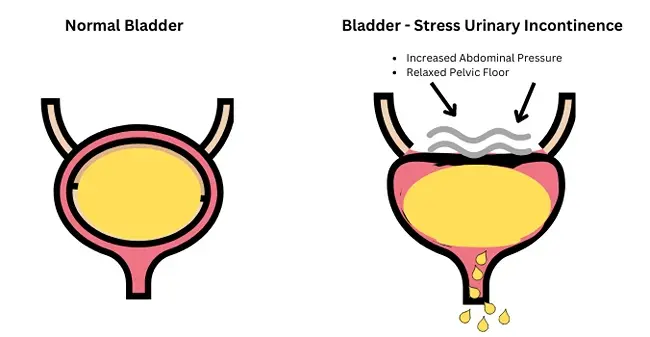
A procedure for stress incontinence is intended to help with leakage with coughing, exertion, or movement. It does not automatically treat urgency or every bladder symptom. Your doctor will review pelvic floor treatment, previous surgery, prolapse, and how well your bladder empties. A urine test and examination are usual parts of assessment. Bladder pressure tests are helpful in selected situations rather than being necessary for everyone.
Urethral bulking injections
Bulking material is injected around the urethra, the passage carrying urine out of the body, to help it close more effectively. This can suit some women who prefer a less involved procedure or for whom other surgery is less suitable. The improvement may be less complete than with an operation that provides stronger support, and further injections may be discussed. The specific material and follow-up plan should be explained.
Slings and mesh choices
A midurethral sling supports the urethra using a narrow strip of synthetic mesh. Retropubic and transobturator approaches, sometimes called TVT and TOT, place it along different routes. They are not identical choices, and recommendations vary with the situation and local guidance. Mesh is a permanent implant. Discuss mesh exposure, persistent pain, and difficulty emptying, and understand that removal may be incomplete. A sling for stress leakage is different from a larger mesh repair for prolapse.
Non-mesh operations
An autologous fascial sling uses a strip of your own tissue for support. Colposuspension lifts and supports tissues near the bladder outlet with stitches. Both avoid a synthetic midurethral mesh strip, but they are still operations with their own recovery and practical considerations. “Non-mesh” does not mean a procedure suits everyone or needs no detailed discussion.
Planning around your priorities
Your preferences about implants, future pregnancy, previous procedures, recovery time, and other bladder symptoms all matter. Ask what improvement the treatment is intended to achieve and what aftercare will involve. Emptying can change after a procedure, so a plan for checking urination is part of good care. The final decision should follow assessment and an individual conversation, rather than a comparison based only on procedure names.
Your next step
At DRHC, Dr. Mansour Masoumi, Specialist Urologist, can review your symptoms, previous results, and personal priorities. Bring a list of medicines and any questions you want answered. The final choice of investigation or treatment follows a full assessment and a discussion with your doctor about what is appropriate for you.
Disclaimer
This article provides general information only and does not replace a medical consultation. Do not use it to diagnose yourself, choose a procedure, or start, stop, or change treatment. Decisions about your care should be made with your doctor after an individual assessment.

Learn more about our Editorial Process.
Topic: Urology Blogs




Leave a comment