

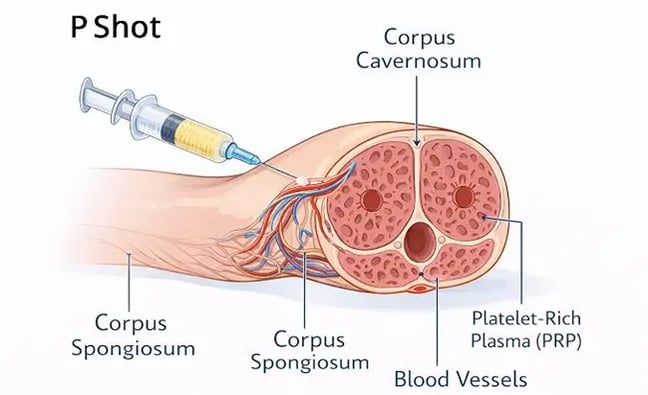
P-Shot is a marketing name commonly used for injections of platelet-rich plasma, or PRP, into the penis. PRP is prepared from a sample of your own blood. It is promoted as a way to improve erections through tissue repair, but a plausible biological explanation is different from proof that a treatment helps patients.
What is being injected?
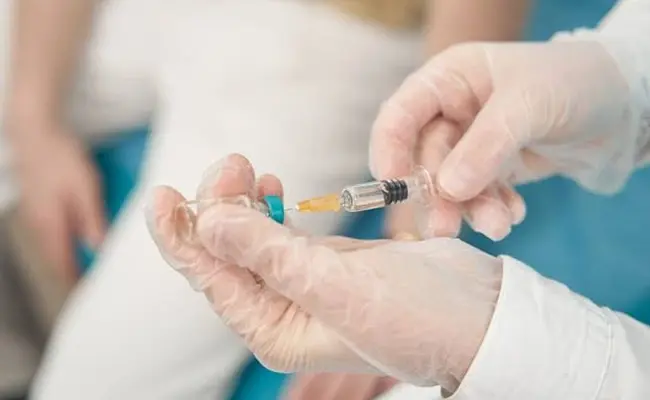
Blood is processed to concentrate platelets, which release signalling substances involved in healing. Preparation methods differ between clinics and studies. The concentration, processing, injection plan, and accompanying treatments are not standardised. Two services using the same promotional name may therefore be offering materially different preparations. PRP is not the same as prescribed erection injections such as alprostadil.
What does research show?
Some small trials have reported improvement, while another blinded placebo-controlled trial found no meaningful advantage over placebo. This uncertainty matters when a treatment is offered as regeneration or a lasting cure. Current European guidance limits penile PRP for ED to a clinical trial setting; American guidance also considers it experimental. It is not an established replacement for standard ED treatment.
Why assessment comes first
An erection problem can involve blood vessels, diabetes, medicines, nerves, hormones or anxiety. New ED can also justify a wider health review. Buying a regenerative treatment package before investigating the problem may delay more useful care. An assessment considers erection firmness, desire, morning erections, previous treatments and relevant tests rather than assuming that every man needs the same injection.
Questions before taking part in research
Ask whether a genuine study has ethics approval, who monitors safety and how results will be measured. Understand the comparison treatment, follow-up visits, financial arrangements and what happens if you withdraw. A testimonial, certificate or scientific-looking explanation does not answer these questions. Consent should make clear that the intervention may offer no benefit and that longer-term uncertainties remain.
What else can be considered?
Established options include addressing health and lifestyle factors, appropriate ED tablets, vacuum devices, prescribed penile injections, and, for selected men, a prosthesis. Psychological or relationship support can be helpful alongside physical treatment. Using your own blood does not make an injection risk-free: discomfort, bruising, and infection are possible. Report worsening pain, redness, fever, or significant swelling promptly.
Your consultation
Dr. Mansour Masoumi, Specialist Urologist, can discuss PRP and P-Shot for ED through DRHC. Bring your medicine list, previous treatment details, and questions about everyday life. The final treatment is chosen after an individual assessment of your health, anatomy, and priorities.
Disclaimer
This article provides general information only and does not replace a medical consultation. Do not use it to diagnose yourself, choose a procedure, or start, stop, or change treatment. Decisions about your care should be made with your doctor after an individual assessment.

Learn more about our Editorial Process.
Topic: Urology Blogs



Leave a comment