

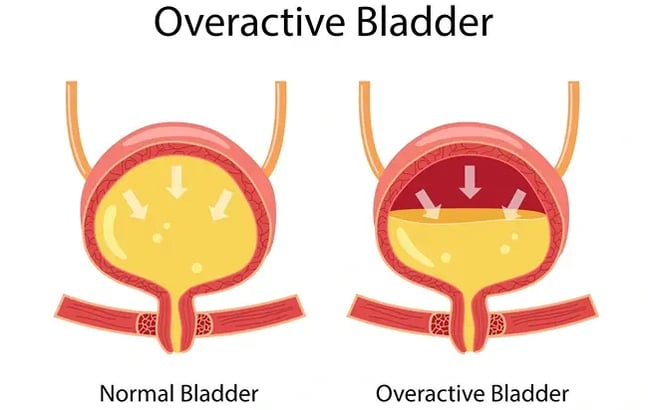
An overactive bladder can make ordinary journeys revolve around the next toilet. Its main feature is urgency: a sudden need to pass urine that is difficult to put off. You may also visit the toilet often, wake at night or leak before reaching it. Some people have urgency without any leakage. These symptoms deserve assessment, even when you have become used to organising your day around them.
Recognising the pattern
The timing of leakage matters. Urine escaping with a cough or jump suggests stress incontinence, whereas leakage following a compelling urge suggests urgency incontinence. Both patterns can occur together. Overactive bladder describes symptoms rather than a visible injury to the bladder. Having this diagnosis does not mean that every episode of frequency, particularly a new or painful episode, has the same explanation.
What else can resemble it?
Urinary infection, menopausal tissue changes, medicines, and difficulty emptying the bladder can cause overlapping problems. Passing large amounts of urine may reflect high fluid intake or another medical condition rather than a bladder storage problem. Night-time urination can have several contributing causes, including sleep difficulties. Your history helps the clinician decide which possibilities need attention rather than assuming urgency explains everything.
Making the appointment useful
A record over at least three typical days can show when you drink, pass urine, and experience urgency or leakage. Include night-time visits and approximate amounts where possible. Bring your medicine list and note any previous pelvic operations. A urine test and examination may be advised. A bladder scan is particularly useful when emptying is uncertain; invasive pressure tests are not routinely needed before initial treatment.
Starting a manageable plan
Treatment often begins with bladder training and tailored adjustments to drinks, caffeine, and bowel habits. The aim is to improve control without leaving you dehydrated or avoiding daily activity. Medicines and selected procedures are available when symptoms remain troublesome. Agree on a goal that matters to you, such as completing a shopping trip, and review the response rather than measuring progress only by the number of toilet visits.
Symptoms that need a different response
Visible blood, persistent bladder pain, or repeated infections need medical assessment rather than being attributed automatically to an overactive bladder. Fever with flank pain or feeling seriously unwell requires prompt care. A sudden inability to pass urine needs urgent assessment. Mention new weakness, numbness, or neurological symptoms, particularly if they accompany a change in bladder or bowel control.
Arrange an individual review
A consultation through DRHC with Dr. Mansour Masoumi, Specialist Urologist, can help put these options into the context of your symptoms, health, and priorities. Bring previous reports and a list of medicines, including non-prescription products. The final treatment is chosen after individual assessment and discussion of the options appropriate for you.
Disclaimer
This article is for education only and does not replace medical advice. It is not intended for self-diagnosis or self-treatment. Do not start, stop, or change treatment on the basis of this information; discuss your own care with a qualified clinician.

Learn more about our Editorial Process.
Topic: Urology Blogs





Leave a comment