

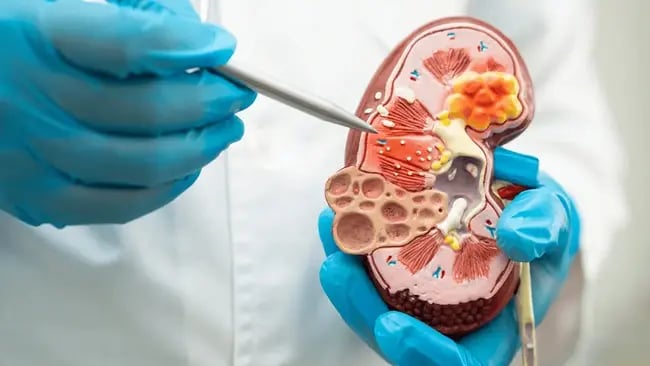
The best way to manage a urinary stone depends on more than its size. Its position, the effect on kidney drainage, infection, pain, and your general health all matter. Some stones can be observed safely, while others need a procedure. Understanding why an option is suggested makes it easier to plan treatment and recovery.
When observation is reasonable
A small ureteric stone may pass without an operation if pain is controlled, infection is absent, and kidney function is protected. Observation still needs a review plan. You should know how long to wait, whether imaging is needed, and when to return urgently. Selected symptom-free kidney stones can also be monitored, with decisions influenced by growth, location, occupation, travel, and previous episodes.
What medicines can and cannot do
Pain medicines are chosen according to kidney function, stomach problems, and other treatments you take. An alpha-blocker may help some ureteric stones pass, particularly certain stones lower in the ureter; this use may be off-label. It does not dissolve every stone. Selected uric acid stones can sometimes be dissolved by carefully changing urine chemistry, with monitoring rather than unsupervised alkalising products.
Comparing ways to remove stones
Shockwave lithotripsy uses energy delivered from outside the body to break suitable stones into fragments that must then pass. Ureteroscopy passes a small instrument through the urinary passage to treat a stone, often with laser fragmentation. Larger or more complex kidney stones may need percutaneous nephrolithotomy, using a small access tract through the back. Anatomy and stone characteristics influence suitability.
Why drainage may come first
If infection and obstruction occur together, urgent drainage with a ureteric stent or nephrostomy may be needed before definitive stone treatment. This protects drainage while the infection is treated. A stent is a temporary internal tube, not proof that the stone has been removed. Ask who is responsible for removal or exchange, and keep the date accessible; a stent should never simply be forgotten.
Plan beyond the procedure
A single treatment does not always clear every fragment, and a further session may be advised. Discuss anaesthesia, time away from work, expected discomfort and the possibility of a temporary stent. Fever, worsening pain, vomiting, or difficulty passing urine after treatment needs prompt review. Once the immediate problem settles, stone analysis and appropriate prevention advice can help reduce the chance of another episode.
Discuss your next step
A consultation with Dr. Mansour Masoumi, Specialist Urologist, through DRHC can help you compare observation, medicines, and procedures in relation to your own stone and priorities. The final treatment is chosen after an individual assessment and discussion of your preferences. Bring previous results and a medicine list so the advice can be based on your own circumstances.
Disclaimer
This article is for education and does not replace a medical consultation. Do not use it for self-diagnosis or self-treatment, or to start, stop, or change medicines. Your doctor should guide care after considering your symptoms, medical history, and individual circumstances.

Learn more about our Editorial Process.
Topic: Urology Blogs



Leave a comment