

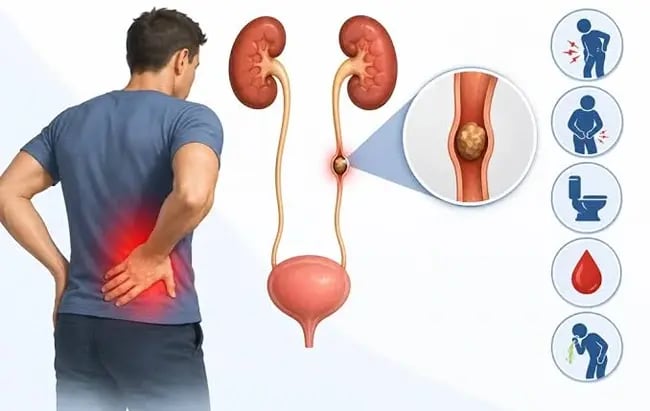
Pain from a urinary stone can arrive suddenly and make it difficult to sit still. Stones form from crystals in urine and may remain quietly in the kidney or move into the ureter, the narrow tube leading to the bladder. Symptoms alone cannot show whether a stone is blocking drainage or whether another condition is responsible.
Recognising the pattern
Typical stone pain starts in the side or back and may travel towards the lower abdomen or groin. It can come in waves, with nausea, vomiting, or blood in the urine. A stone close to the bladder may cause urgency. However, a stone found incidentally on a scan may cause no symptoms, and not every backache comes from the urinary tract.
When the situation is urgent
Fever or shaking chills alongside suspected stone pain need emergency assessment. Infection behind a blockage can become serious quickly and may need urgent drainage as well as antibiotics. Inability to pass urine, uncontrolled pain, repeated vomiting or feeling faint also require urgent help. Tell the team immediately if you have one functioning kidney, are pregnant or have significant kidney disease.
What the first checks establish
The clinician asks about pain, previous stones, infection symptoms, medicines and medical conditions. Urine testing can identify blood or possible infection; blood tests may assess kidney function and inflammation. These checks help establish how safely a stone can be managed. A normal-looking urine sample does not completely exclude a stone, and blood in urine has other possible causes requiring attention.
Choosing an appropriate scan
In many adults, a non-contrast CT scan gives detailed information about a suspected ureteric stone, including its size, position and obstruction. Ultrasound is usually preferred initially in pregnancy and children. The team balances the information needed against radiation exposure and your circumstances. Bring previous scan reports or images, especially if you have already been assessed elsewhere for the same episode.
Relief is only part of the plan
Pain control can make assessment more manageable, but feeling better does not prove that a stone has passed. You may need repeat imaging or another check to confirm drainage. Before leaving, establish what the working diagnosis is, how results will be reviewed and which symptoms require a return. Avoid forcing large volumes of water during severe pain or obstruction.
Discuss your next step
A consultation with Dr. Mansour Masoumi, Specialist Urologist, through DRHC can help you understand the scan findings and agree on a safe plan for pain, stone clearance, and follow-up. The final treatment is chosen after an individual assessment and discussion of your preferences. Bring previous results and a medicine list so the advice can be based on your own circumstances.
Disclaimer
This article is for education and does not replace a medical consultation. Do not use it for self-diagnosis or self-treatment, or to start, stop, or change medicines. Your doctor should guide care after considering your symptoms, medical history, and individual circumstances.

Learn more about our Editorial Process.
Topic: Urology Blogs





Leave a comment