

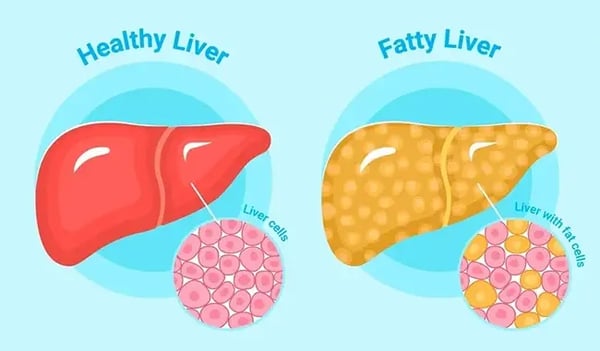
Being told that you have fatty liver can raise many questions, especially when your ultrasound or medical report mentions terms such as "Grade 2 fatty liver" or "Stage F2 fibrosis." Although they may sound similar, these terms describe two very different aspects of liver health.
At Dr. Rami Hamed Center (DRHC) Dubai, our specialists help patients understand what their results mean and recommend the most appropriate investigations and treatment plan before liver damage progresses.
Two Different Measurements of Liver Health
Think of your liver as an organ that can both store fat and develop scarring. These changes are measured separately:
- Fatty liver grade measures how much fat has accumulated inside the liver.
- Fibrosis stage measures how much permanent scar tissue has developed due to ongoing inflammation or liver injury.
A person may have severe fat accumulation with very little scarring, while another may have less fat but more advanced fibrosis.
What Does Fatty Liver Grade Mean?
Fatty Liver Disease is commonly graded from Grade 1 to Grade 3 based on the amount of fat seen on imaging.
- Grade 1: Mild fat accumulation.
- Grade 2: Moderate fat accumulation.
- Grade 3: Severe fat accumulation affecting much of the liver.
The grade reflects the amount of fat present, but it does not indicate whether permanent liver damage has occurred.
What Is Fibrosis Stage?
Fibrosis develops when long-term inflammation causes scar tissue to replace healthy liver tissue. Unlike fat accumulation, fibrosis may gradually reduce liver function if left untreated.
Fibrosis is commonly staged from F0 to F4:
- F0: No fibrosis.
- F1: Mild fibrosis.
- F2: Moderate fibrosis.
- F3: Advanced fibrosis.
- F4: Cirrhosis.
The fibrosis stage is often more important than the fatty liver grade because it helps predict the risk of future liver complications.
Can You Have a High Fatty Liver Grade Without Fibrosis?
Yes. Many patients in Dubai are surprised to learn that a liver with significant fat accumulation may still have little or no scarring. On the other hand, some patients with only mild fatty liver may already have developed fibrosis because of long-standing inflammation, diabetes, obesity, or other metabolic conditions.
This is why doctors evaluate both fat accumulation and liver scarring rather than relying on ultrasound findings alone.
How Is Fibrosis Assessed?
If fatty liver is detected, your gastroenterologist may recommend additional investigations to assess liver health, including:
- Liver Function Tests
- Fibrosis assessment using non-invasive scoring systems
- Ultrasound and additional liver imaging when required
- Assessment of diabetes, cholesterol, blood pressure, and other metabolic risk factors
Only a complete evaluation can determine whether the liver has developed fibrosis and whether treatment is needed.
Why Does the Difference Matter?
Understanding the difference between fatty liver grade and fibrosis stage helps guide treatment decisions.
- Fatty liver can often improve through weight loss and lifestyle changes.
- Fibrosis requires closer monitoring because advanced scarring may become permanent if ignored.
- Early identification allows treatment before cirrhosis develops.
- Regular follow-up helps monitor improvement over time.
When Should You See a Gastroenterologist?
You should arrange an assessment if you:
- Have been diagnosed with fatty liver on ultrasound.
- Have diabetes, obesity, or metabolic syndrome.
- Have abnormal or persistently elevated liver function tests.
- Have a family history of chronic liver disease.
- Want to know whether fatty liver has progressed to fibrosis.

Learn more about our Editorial Process.
Topic: Gastroenterolgy Fatty Liver



Leave a comment