

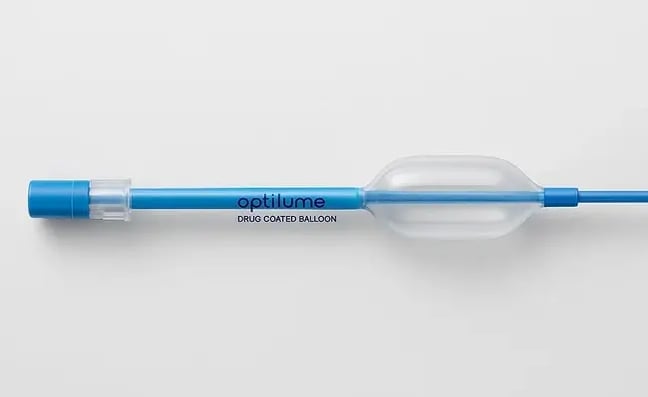
Drug-coated balloon treatment combines mechanical widening of a urethral stricture with delivery of medicine to the scarred area. It is an option for some men whose short narrowing has returned after previous endoscopic treatment. It is not a universal substitute for urethroplasty, the operation that reconstructs the urinary passage. Understanding the precise scar pattern and the evidence for that pattern comes first.
What the balloon does
A stricture is a ring or segment of scar that restricts urine flow. During treatment, instruments passed through the urethra widen the narrowed area, and a balloon coated with paclitaxel is positioned across it. Inflation brings the drug into contact with the tissue to reduce recurrent scarring. The balloon is then deflated and removed. It is not an implant left inside, and it does not treat benign prostate enlargement in this setting.
Who has the strongest supporting evidence?
The best-established guideline role is a short recurrent bulbar stricture after previous endoscopic treatments, particularly when a patient cannot have or does not want urethroplasty. Bulbar means the section of urethra below the prostate. Evidence is less certain for longer scars, other sites and complex causes. The clinician should explain whether your case matches the studied population and the exact device instructions, rather than treating regulatory eligibility as proof of equal benefit.
Assessment and alternatives
Flow tests, bladder scanning, cystoscopy or urethral imaging help determine length, location and severity. Previous dilatations, urethrotomies, reconstruction, radiation and infections are relevant. Options may include urethroplasty, selected conventional endoscopic treatment or a catheter strategy. Repeating a smaller procedure is not automatically preferable to reconstruction. Ask how much time without further intervention is realistic and what choices remain if the narrowing returns.
Preparation and the procedure
An active urinary infection needs treatment before planned instrumentation. Tell the team about all medicines, allergies, penile implants and artificial urinary sphincters because these may affect eligibility for a particular device. Anaesthetic and temporary catheter arrangements vary. You should receive instructions for catheter removal, comfort measures and return to activity. Neither the balloon size nor the drug dose should be chosen by a patient from general information online.
Sex, contraception and fertility
Paclitaxel may be present in semen after treatment, so device-specific sexual precautions matter. For the established urethral drug-coated balloon, instructions include abstinence or condoms for 30 days, with highly effective contraception and avoidance of fathering children for at least six months when a partner could become pregnant. Discuss plans to conceive before treatment, and obtain the exact current written instructions for the device used rather than relying on this overview alone.
Recovery and surveillance
Temporary burning, a small amount of blood, or discomfort may occur. Fever with feeling unwell, inability to pass urine or a catheter that stops draining needs urgent assessment. Follow-up checks symptoms, stream and emptying; recurrence can develop despite a good early result. A slowing stream should prompt review rather than self-dilatation unless a clinician has specifically prescribed and taught it. The next step depends on the findings and your longer-term goals.
Discussing your options through DRHC
A consultation with Dr. Mansour Masoumi, Specialist Urologist, can help connect these choices with your symptoms, previous treatment, and practical priorities. Bring relevant results and a current medicine list. Care can be discussed and arranged through DRHC; the final treatment is chosen after an individual assessment and an explanation of the likely benefits, limitations, and alternatives.
Disclaimer:
This article is educational and does not replace a medical consultation. Do not use it for self-diagnosis or self-treatment, or to start, stop, or change medicines. Your doctor should guide decisions after assessing your circumstances.

Learn more about our Editorial Process.
Topic: Urology Blogs



Leave a comment