

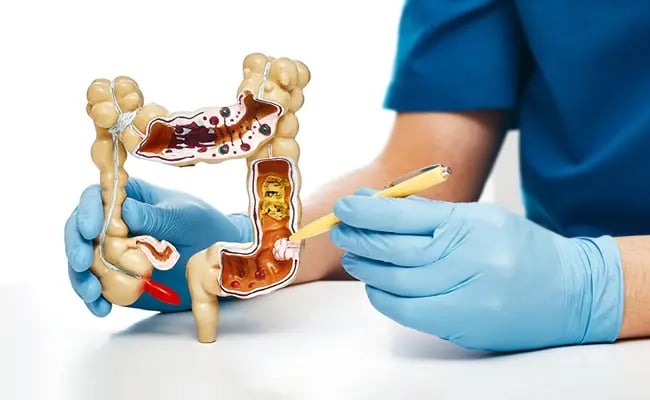
Hearing that a colon polyp has been found during a colonoscopy can be worrying. Many patients immediately wonder whether it is cancer or if another procedure will be needed. The reassuring news is that most colon polyps are non-cancerous (benign), and in many cases, they can be safely removed during the same colonoscopy.
At Dr. Rami Hamed Center (DRHC) Dubai, our gastroenterology team uses advanced endoscopic techniques to diagnose and remove many types of colon polyps without the need for traditional surgery.
What Is a Colon Polyp?
A colon polyp is a small growth that develops on the inner lining of the large intestine (colon) or rectum. While many polyps never cause symptoms, some types can gradually develop into colorectal cancer over several years if left untreated.
This is why regular colon cancer screening is so important. Detecting and removing polyps early significantly reduces the risk of colorectal cancer.
Can Polyps Be Removed During the Same Colonoscopy?
Yes. In most cases, colon polyps can be removed immediately during the same colonoscopy. This procedure is called a polypectomy.
Removing the polyp at the time it is discovered offers several advantages:
- Avoids the need for another colonoscopy in many cases.
- Reduces the chance of the polyp growing larger.
- Helps prevent certain polyps from developing into colorectal cancer.
- Allows the removed tissue to be examined under a microscope for an accurate diagnosis.
How Are Colon Polyps Removed?
The method used depends on the size, shape, and location of the polyp.
- Small polyps are usually removed using special biopsy forceps or a wire snare.
- Larger polyps may require a snare with electrical current to remove them safely.
- Some larger or flat polyps can be removed using advanced techniques such as Endoscopic Mucosal Resection (EMR).
These techniques allow many patients to avoid conventional surgery while achieving excellent treatment outcomes.
Will the Removed Polyp Be Tested?
Yes. Every removed polyp is sent to a laboratory for detailed examination. This helps determine:
- The type of polyp.
- Whether abnormal or precancerous cells are present.
- Whether additional treatment or future surveillance is required.
Your gastroenterologist will explain the pathology results and recommend an appropriate follow-up plan.
Do All Polyps Need to Be Removed?
Most polyps are removed because it is difficult to determine whether they could become cancerous simply by looking at them during the colonoscopy. Removing them early is considered the safest approach for preventing future complications.
In rare situations, if a polyp is exceptionally large or has features suggesting deeper involvement, additional procedures or surgery may be recommended after further evaluation.
Recovery After Polyp Removal
Most patients recover quickly after a colonoscopy with polypectomy and return home the same day. Mild bloating or passing gas is common for a short period after the procedure.
Your doctor may advise you to avoid strenuous activities for a short time, depending on the size and number of polyps removed. You will also receive instructions regarding diet, medications, and follow-up appointments.
When Should You Seek Medical Advice?
Although complications are uncommon, you should contact your healthcare provider immediately if you experience:
- Heavy rectal bleeding.
- Severe abdominal pain.
- Persistent fever.
- Dizziness or fainting.
- Continuous vomiting after the procedure.
Advanced Colonoscopy and Polypectomy at DRHC Dubai
At DRHC Dubai, our experienced gastroenterologists provide comprehensive diagnostic and therapeutic endoscopy services, including colonoscopy, EMR and polypectomy, and complete colon cancer screening. Each patient receives an individualized treatment plan designed to achieve the best possible outcome while minimizing the need for surgery whenever appropriate.

Learn more about our Editorial Process.
Topic: Gastroenterolgy Endoscopy



Leave a comment