

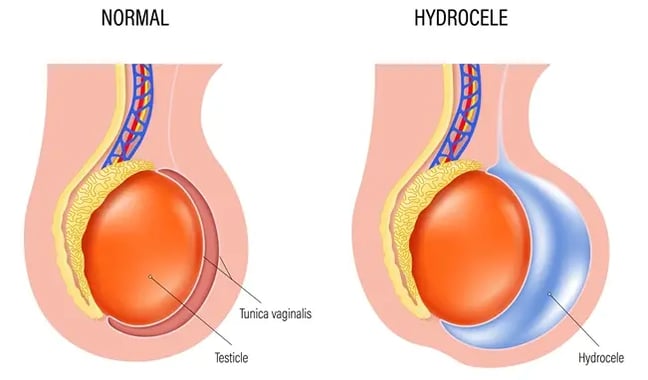
Hydrocele repair is considered when a childhood hydrocele persists, causes problems, or is associated with a hernia. The operation treats the cause of the fluid collection rather than simply emptying it. The surgeon should explain why repair is appropriate now and how the plan differs from continuing observation in your child’s particular circumstances.
Before making the decision
An examination confirms the groin and scrotal findings and checks both testicles. Some children need an ultrasound to clarify an uncertain swelling. Tell the surgeon about changes in size, previous pain, and any earlier groin operation. Ask whether there is a hernia, which side will be treated, and what would happen if another finding appears during surgery. A painless infant hydrocele does not automatically need immediate repair.
What the operation involves
For a communicating hydrocele, repair usually closes the small open passage between the abdomen and scrotum. It is commonly done through a small groin incision under general anaesthesia. Techniques differ according to age, anatomy, and the surgeon’s assessment. The fluid around the testicle is addressed as part of the procedure. Needle drainage alone does not reliably correct the open passage and is not a routine treatment for a child.
Preparing for the day
Follow the hospital’s exact fasting instructions and tell the preoperative team about medicines, allergies, and recent illness. A cold, fever, or other infection may affect anaesthetic planning. Ask which pain medicines to have ready and arrange transport and a responsible adult for home care. Explain the visit to an older child in simple terms and bring familiar items that help them settle.
Going home and early recovery
Many children go home the same day when comfortable, drinking, and passing urine appropriately. Some need longer observation because of age or other health needs. Bruising and swelling may remain even after a successful repair, so the scrotum may not look smaller immediately. Follow the team’s instructions for wound dressings, washing, nappies, and pain relief; avoid adding creams or antiseptics without advice.
Returning to ordinary activities
Comfortable clothing can reduce rubbing around the incision. The surgeon will specify when nursery, school, cycling, swimming, and contact play can restart. Do not use another family’s timetable, as the operation and healing may differ. Make sure other carers receive the same instructions. Keep the discharge letter, review appointment, and report a persistent or returning swelling rather than assuming it is normal indefinitely.
Complications and warning signs
Important possible problems include wound infection, bleeding, and recurrence. Injury to structures beside the passage is an uncommon surgical risk that the surgeon should explain in proportion to the planned repair. Seek prompt advice for fever, increasing redness, worsening swelling or pain, discharge, or bleeding that continues. Inability to pass urine, repeated vomiting, severe scrotal pain, or a very unwell child needs urgent hospital assessment. Knowing the correct out-of-hours contact is part of discharge preparation.
Your child's next step
A consultation through DRHC with Dr. Mansour Masoumi, Specialist Urologist, can help clarify your child’s findings and arrange the appropriate paediatric specialist pathway. Bring previous reports and a list of your questions. The final treatment is chosen after individual assessment, with the child’s age, symptoms, and family circumstances taken into account.
Disclaimer
This article is educational and does not replace a medical consultation. Do not use it for self-diagnosis or self-treatment, or to start, stop, or change your child’s medicines. Follow the advice from the clinician responsible for your child’s care.

Learn more about our Editorial Process.
Topic: Urology Blogs





Leave a comment